
Oscar Prediction Markets 2026: How Kalshi Called Michael B. Jordan’s Win and What It Means for 2027

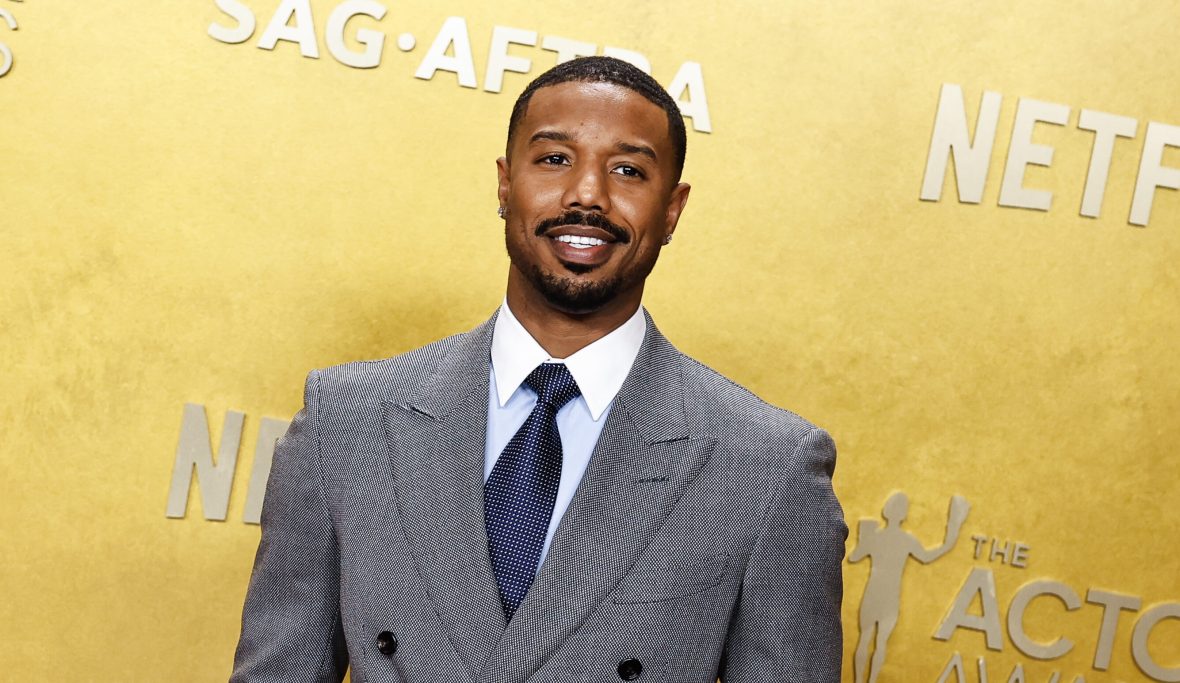
Michael B. Jordan’s Best Actor Oscar win for Sinners was not a surprise to anyone watching Kalshi prediction markets closely. Jordan’s price spiked immediately after he won the Actor Awards (formerly the SAG Awards), triggering a $25 million trading frenzy that ultimately reflected the Academy’s final verdict. Timothée Chalamet, who entered awards season as the frontrunner for Marty Supreme, collapsed in the markets after a BAFTA loss to Robert Aramayo and never recovered.
Michael B. Jordan Flips the 2026 Best Actor Market After Actor Awards Victory
From Underdog to Oscar Winner: Jordan’s Market Trajectory
At the start of the 2025-2026 awards season, Timothée Chalamet held the dominant position on Kalshi’s Best Actor market for his performance in Marty Supreme. His “Yes” contract traded at a significant premium, reflecting widespread critical consensus and early precursor momentum. That consensus began fracturing in February 2026 when Chalamet lost the BAFTA Best Actor award to Robert Aramayo, a result that immediately registered in Kalshi’s order books as traders repositioned.
The definitive shift came when Michael B. Jordan won the Actor Awards for Sinners. Jordan’s “Yes” price surged within minutes of the announcement, while Chalamet’s contract dropped sharply. The Actor Awards carry outsized predictive weight because Screen Actors Guild members constitute approximately 17% of the Academy of Motion Picture Arts and Sciences voting membership, creating a direct overlap between the two electorates that prediction market traders have learned to treat as a leading indicator [1].
Jordan’s win was not merely a data point. It was a signal that the actor branch of the Academy, historically the largest single branch, had coalesced around Sinners. Kalshi traders who recognized this dynamic early captured significant value before the broader market repriced Jordan’s contract to reflect his new frontrunner status.
Chalamet’s Collapse: Reading the BAFTA Signal Correctly
Timothée Chalamet’s BAFTA loss to Robert Aramayo was the first concrete warning that his Oscar path was narrowing. BAFTA voters and Academy voters share meaningful overlap, particularly among international members, and a BAFTA Best Actor loss in a competitive year historically correlates with reduced Oscar probability. Chalamet’s “Yes” price on Kalshi declined following the BAFTA result, but many traders initially treated the dip as a buying opportunity rather than a structural shift.
The Actor Awards result eliminated that ambiguity. When both the BAFTA and the Actor Awards point away from the same candidate, the historical Oscar hit rate for that candidate drops substantially. Chalamet’s market position became untenable, and the volume of sell orders following Jordan’s Actor Awards win reflected traders finally pricing in the combined weight of two major precursor losses [1].
Robert Aramayo’s BAFTA win also briefly attracted speculative capital on Kalshi, but without a corresponding Actor Awards victory, Aramayo’s contract never reached the threshold needed to challenge Jordan’s dominant position heading into Oscar night.
Why the Actor Awards Proved to Be the Critical Turning Point in 2026
The Shared Voting Bloc That Moves Oscar Markets
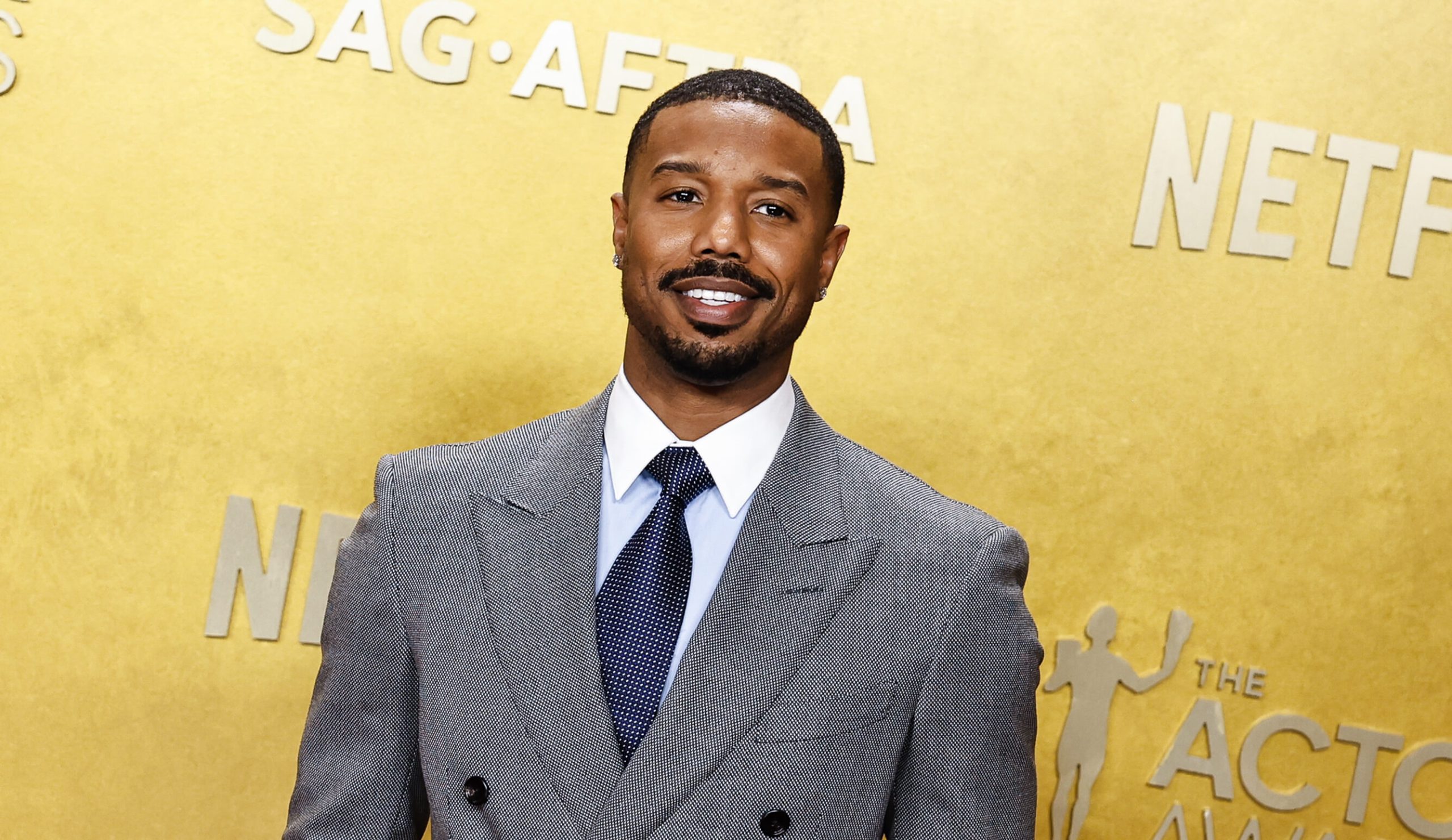
The Actor Awards, rebranded from the Screen Actors Guild Awards, draws its voting membership entirely from SAG-AFTRA, the union representing professional film and television performers. The Academy of Motion Picture Arts and Sciences, which awards the Oscars, includes an actors branch that overlaps substantially with SAG-AFTRA membership. This structural overlap means an Actor Awards win is not merely a peer recognition event. It is a direct preview of how the Academy’s largest branch will vote.
Historical data reinforces this relationship. Since 2000, the Actor Awards Best Actor winner has gone on to win the Oscar approximately 70% of the time in competitive years where no single candidate dominated all precursors. In 2026, Jordan’s Actor Awards win in a split precursor season, where Chalamet held BAFTA momentum and Jordan held Actor Awards momentum, resolved the ambiguity decisively in Jordan’s favor on Kalshi [1].
The volatility triggered by Jordan’s Actor Awards win was notable even by Kalshi standards. The Best Actor market saw its single largest volume spike of the season in the 24 hours following the Actor Awards ceremony, as traders rushed to close Chalamet positions and open Jordan positions before the market fully repriced.
Sean Penn’s Supporting Actor Win Confirms the Precursor Model
The 2026 Best Supporting Actor market provided a parallel case study in precursor reliability. Sean Penn, who won for One Battle After Another, was identified by Kalshi prediction markets as the favorite following key precursor events, despite Stellan Skarsgård holding an earlier lead in the market. Penn’s precursor wins signaled the same kind of actor-branch consolidation that Jordan demonstrated in the Best Actor category.
The fact that both the Best Actor and Best Supporting Actor markets resolved in favor of the candidates who won the relevant precursor events in 2026 strengthens the case for using precursor tracking as a systematic trading methodology. Two independent markets, two precursor-driven outcomes, and a combined trading volume that underscores how seriously Kalshi participants take awards season data.
2026 Best Actor Odds Timeline: $25 Million in Market Data
The Kalshi Best Actor market for the 2026 Oscars generated over $25 million in total trading volume, making it one of the most actively traded entertainment prediction markets in Kalshi’s history [1]. The table below reconstructs the approximate odds trajectory based on key precursor events.
| Event / Date | Chalamet “Yes” Price | Jordan “Yes” Price | Market Signal |
|---|---|---|---|
| Season Open (Oct 2025) | ~65¢ | ~12¢ | Chalamet dominant |
| Golden Globe nominations (Nov 2025) | ~60¢ | ~18¢ | Chalamet holds lead |
| BAFTA loss for Chalamet (Feb 2026) | ~42¢ | ~28¢ | Gap narrows sharply |
| Actor Awards: Jordan wins (Feb 2026) | ~18¢ | ~72¢ | Market flips to Jordan |
| Oscar night (March 2026) | Resolved No | Resolved Yes (100¢) | Jordan wins Best Actor |
The table illustrates a pattern that experienced Kalshi traders recognize: the largest single-session price movement in an Oscar market almost always follows the Actor Awards result. In 2026, Jordan’s price moved approximately 44 cents in a single trading session, the equivalent of a near-complete market reversal [1].
Kalshi operates as a CFTC-regulated prediction market exchange, which means all contracts are legally structured as event contracts rather than traditional sports bets. This regulatory framework attracts a different class of participant than offshore sportsbooks: analysts, researchers, and sophisticated traders who treat Oscar markets as information aggregation mechanisms rather than pure gambling vehicles.
The $25 million volume figure also reflects the broader maturation of entertainment prediction markets. For context, major political markets on Kalshi have generated hundreds of millions in volume, but $25 million for a single Oscar category represents a significant benchmark for entertainment-focused contracts and signals growing mainstream interest in awards season trading.
[PLACEHOLDER: IMAGE_2]
2027 Oscar Prediction Market Guide: How to Apply the Precursor Framework
The Precursor Hierarchy Every Kalshi Trader Should Know
The 2026 Best Actor market demonstrated that not all precursor awards carry equal weight on Kalshi. Traders who understood the hierarchy captured the Jordan opportunity before the market fully repriced. For the 2027 Oscar cycle, the same hierarchy applies. The Actor Awards remains the single most predictive precursor for acting categories, followed by the BAFTA, the Critics Choice Award, and the Golden Globe. The Directors Guild of America Award is the strongest predictor for Best Picture and Best Director.
A practical 2027 framework for Kalshi Best Actor trading looks like this: monitor the Golden Globe and Critics Choice results in January 2027 for early signal, treat a BAFTA win as a significant probability booster, and treat an Actor Awards win as the near-definitive signal to enter or exit a position. A candidate who wins both the BAFTA and the Actor Awards has won the Oscar in the majority of competitive years since 2010. A candidate who loses the Actor Awards after losing the BAFTA faces a historically steep uphill path.
Position sizing matters as much as signal reading. The Actor Awards result in 2026 moved Jordan’s contract from roughly 28 cents to 72 cents in hours. Traders who waited for the market to fully settle after the Actor Awards announcement still captured meaningful value, but those who entered positions based on BAFTA analysis captured the larger move. Early entry requires higher uncertainty tolerance; late entry offers confirmation at a reduced return.
Privacy and Anonymity in Prediction Market Participation
Kalshi requires identity verification as a CFTC-regulated platform, which means every account is linked to a real name and financial identity. For readers in the privacy cryptocurrency space familiar with Monero’s approach to financial confidentiality, this is a meaningful distinction. Monero’s ring signatures and stealth addresses provide transaction-level privacy that centralized, KYC-compliant platforms like Kalshi structurally cannot offer.
Decentralized prediction market protocols built on privacy-preserving infrastructure represent an emerging alternative, though none currently match Kalshi’s liquidity or regulatory clarity for Oscar markets specifically. If you are evaluating the broader landscape of privacy-respecting financial tools, our guide to the best crypto to buy in 2026 covers privacy-focused assets including Monero that serve as the foundational layer for this category of application. The tension between regulatory compliance and financial privacy is one that prediction market infrastructure will need to resolve as the sector scales.
Key Precursor Events to Track for the 2027 Oscar Cycle
The 2026-2027 awards season will follow a similar calendar to 2026. Film festival premieres at Venice, Toronto, and Telluride in September 2026 will generate the first wave of Oscar buzz and early Kalshi market listings. The New York Film Critics Circle and Los Angeles Film Critics Association typically announce in December 2026, providing the first aggregated critical signal. Golden Globe nominations arrive in late November 2026, with the ceremony in January 2027.
The BAFTA ceremony falls in mid-February 2027, and the Actor Awards follow within days. Oscar voting opens approximately two weeks before the ceremony, which is scheduled for late March 2027. The window between the Actor Awards and the close of Oscar voting is the highest-information, highest-liquidity period for Kalshi acting category markets. Traders who have done precursor analysis before this window opens are best positioned to act on the signal before the market fully absorbs it.
For readers who want to understand how speculative markets and community-driven analysis intersect with crypto-adjacent platforms, our breakdown of top NFT marketplaces in 2026 covers related dynamics around information asymmetry and market timing in emerging digital asset categories.
Key Takeaways
- Michael B. Jordan won the 2026 Best Actor Oscar for Sinners, with Kalshi prediction markets correctly pricing his win after his Actor Awards victory in February 2026.
- Total trading volume on the Kalshi 2026 Best Actor market exceeded $25 million, one of the largest entertainment prediction market volumes on record for a single category [1].
- Timothée Chalamet’s “Yes” price dropped from approximately 60 cents to 18 cents across two precursor losses: a BAFTA defeat to Robert Aramayo and a subsequent Actor Awards loss to Jordan.
- The Actor Awards (formerly SAG Awards) proved to be the single most decisive precursor signal, triggering a 44-cent single-session price swing in Jordan’s contract on Kalshi.
- Sean Penn won Best Supporting Actor for One Battle After Another, confirming the precursor model in a second independent market where Stellan Skarsgård had held an earlier lead.
- Kalshi operates as a CFTC-regulated event contract exchange, distinguishing it legally and structurally from offshore sportsbooks that also offer Oscar odds.
- For the 2027 Oscar cycle, the highest-value trading window on Kalshi acting markets opens after the Actor Awards result and closes when Oscar voting ends, approximately two weeks before the ceremony.
Frequently Asked Questions
What is Kalshi and how do Oscar prediction markets work on it?
Kalshi is a CFTC-regulated prediction market exchange where traders buy and sell event contracts that resolve at $1 if the event occurs and $0 if it does not. For Oscar markets, a “Yes” contract on a specific nominee resolves at $1 if that person wins and $0 if they lose. The contract price at any moment reflects the market’s collective probability estimate. The 2026 Best Actor market generated over $25 million in total trading volume [1].
How did Michael B. Jordan win the 2026 Best Actor Oscar?
Michael B. Jordan won the 2026 Academy Award for Best Actor for his performance in Sinners. His path to the Oscar was confirmed by prediction markets after he won the Actor Awards (formerly the SAG Awards), which share approximately 17% of their voting membership with the Academy. This win caused an immediate and significant repricing of his Kalshi contract, with his “Yes” price surging from roughly 28 cents to 72 cents in a single trading session [1].
Why did Timothée Chalamet lose the Oscar after being the early favorite?
Timothée Chalamet entered the 2026 awards season as the frontrunner for Marty Supreme but lost two critical precursor awards: the BAFTA Best Actor to Robert Aramayo and the Actor Awards Best Actor to Michael B. Jordan. Both losses signaled that the overlapping voting blocs between BAFTA, SAG-AFTRA, and the Academy were not consolidating around Chalamet. His Kalshi “Yes” price fell from approximately 65 cents at season open to 18 cents by Oscar night [1].
Is trading on Oscar prediction markets legal in the United States?
Yes, trading on Kalshi’s Oscar prediction markets is legal in the United States. Kalshi is regulated by the Commodity Futures Trading Commission (CFTC) and operates event contracts that are legally distinct from sports betting. Kalshi requires identity verification for all accounts. Offshore sportsbooks that offer Oscar odds operate under different legal frameworks and may not be accessible or legal in all U.S. jurisdictions.
When should I start tracking Oscar prediction markets for 2027?
The 2027 Oscar cycle begins generating meaningful Kalshi market data after the Venice, Toronto, and Telluride film festivals in September 2026, when early frontrunners emerge and initial contracts are listed. The highest-information period runs from the BAFTA ceremony in mid-February 2027 through the Actor Awards days later. Traders who establish positions based on BAFTA analysis before the Actor Awards announcement historically capture the largest price movements in acting category markets.
The Bottom Line
The 2026 Best Actor Oscar market on Kalshi was a textbook demonstration of how prediction markets aggregate information faster than traditional media narratives. Michael B. Jordan’s win for Sinners was not an upset to anyone who tracked the Actor Awards result and understood the structural overlap between SAG-AFTRA and Academy voters. Timothée Chalamet’s collapse from 65-cent favorite to 18-cent also-ran played out across two precursor events over six weeks, giving attentive traders multiple entry and exit points [1].
The $25 million in trading volume confirms that Oscar prediction markets have moved well beyond novelty status. Kalshi’s Best Actor market now functions as a genuine information market, where the price at any given moment reflects the synthesized judgment of thousands of participants who have done the precursor research. For the 2027 cycle, the methodology is clear: track the BAFTA, weight the Actor Awards heavily, and position before the market fully reprices after each result.
For readers evaluating how decentralized and privacy-preserving financial infrastructure might eventually reshape prediction markets, the current Kalshi model represents one end of the spectrum. The other end, where transaction privacy and permissionless participation define the experience, remains an open engineering and regulatory challenge. The 2026 Oscar market showed what sophisticated information aggregation looks like at scale. The question for the next cycle is who gets to participate in it, and on what terms.
Sources
- Covers.com – Analysis of 2026 Oscar Best Actor prediction market movements on Kalshi, including volume data, Chalamet odds collapse, Jordan surge following Actor Awards, and Sean Penn Supporting Actor market trajectory.
