
zkSync Era Explained: How Ethereum’s Zero-Knowledge Rollup Works

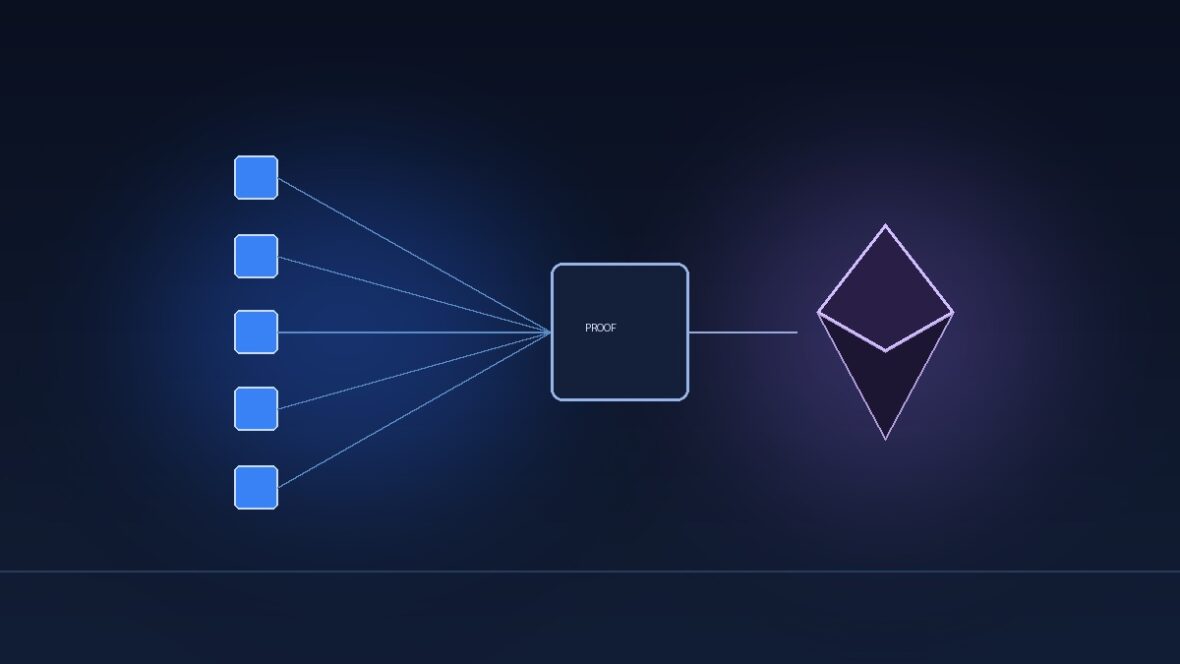
zkSync Era is a Layer 2 network for Ethereum that bundles thousands of transactions into a single cryptographic proof, cutting fees and increasing throughput while still settling to Ethereum for security. It’s built by Matter Labs, launched on mainnet in March 2023, and is one of the reasons “zk” shows up in crypto brand names, including this one.
Key takeaways: zkSync Era is a zk-rollup, meaning it uses zero-knowledge proofs (specifically validity proofs) rather than the fraud-proof model used by optimistic rollups like Arbitrum or Optimism. It’s EVM-compatible, so most Ethereum smart contracts deploy on it with little to no change. The network has its own token, ZK, distributed via airdrop in June 2024.
What Problem Is zkSync Era Actually Solving?
Ethereum’s base layer is secure but slow and expensive when demand spikes. Every transaction has to be processed and stored by every node on the network. A rollup moves the heavy computation off-chain, processes a batch of transactions there, and then submits a compressed proof back to Ethereum showing the batch was executed correctly. Ethereum only has to verify that proof, not redo the work, which is dramatically cheaper.
Zk-Rollup vs Optimistic Rollup: The Difference That Matters
Optimistic rollups (Arbitrum, Optimism) assume transactions are valid by default and give anyone a window, usually about seven days, to submit fraud proof if something’s wrong. That withdrawal delay exists because the network needs time to catch a bad actor.
Zk-rollups like zkSync Era do the opposite: they generate a mathematical proof that the batch of transactions is valid before it’s ever submitted to Ethereum. There’s no waiting period because there’s nothing to dispute, the proof already guarantees correctness. The tradeoff is that generating those proofs is computationally heavier than the optimistic approach, which is why zk-rollups took longer to mature than their optimistic counterparts.
How the Proving System Actually Works
zkSync Era uses its own zkEVM, a virtual machine designed to be provable with zero-knowledge cryptography while staying compatible with Ethereum’s existing tooling. Most Solidity contracts deploy with little to no modification, though it isn’t bit-for-bit identical to the Ethereum Virtual Machine, some low-level edge cases behave differently.
In 2023, Matter Labs shipped an upgrade called Boojum, which redesigned the proving system to run on consumer-grade GPUs instead of requiring specialized, expensive hardware. That mattered for decentralizing who can actually generate proofs for the network, rather than leaving it to a small number of well-funded operators.
The ZK Token and Governance
Matter Labs distributed the ZK token via airdrop in June 2024 to early users and ecosystem participants. The token is tied to network governance and the broader “ZK Nation” structure Matter Labs set up to gradually decentralize decision-making over the protocol’s future, moving control away from the founding company over time.
Why “zk” Shows Up in So Many Crypto Brand Names
Zero-knowledge cryptography became one of the defining technical stories of the 2023-2024 Ethereum scaling cycle, and plenty of projects, this one included, adopted “zk” branding to signal alignment with that wave. The zk prefix specifically refers to zero-knowledge proofs: cryptographic methods that let one party prove a statement is true without revealing the underlying data. It’s the same family of cryptography that Zcash uses for its shielded transactions, just applied to scaling Ethereum instead of hiding a payment.
For a deeper look at that other use of zero-knowledge cryptography, see our Monero vs Zcash comparison, which covers how Zcash’s zk-SNARKs work for privacy specifically.
Building on zkSync Era
Because zkSync Era is EVM-compatible, existing Ethereum development patterns mostly carry over. We’ve previously covered one specific technical pattern relevant to builders on the network in our piece on deploying an EIP-1167 minimal proxy with Vyper on zkSync Era, which walks through a gas-efficient contract cloning pattern and where it does and doesn’t behave identically to mainnet Ethereum.
zkSync Era vs Other zkEVMs
Not all zkEVMs are built the same way. Vitalik Buterin’s widely cited classification splits them into types: Type 1 is fully consensus-equivalent to Ethereum, Type 2 executes standard EVM bytecode with no changes, Type 3 is close but has minor deviations, and Type 4 compiles higher-level source code (like Solidity) into a different, more provable format rather than running raw EVM bytecode directly.
zkSync Era falls into the Type 4 category: its zksolc and zkvyper compilers translate Solidity and Vyper into zkSync’s own bytecode rather than executing standard EVM opcodes unmodified. Projects like Polygon zkEVM and Scroll have aimed closer to Type 2 or Type 3, prioritizing bytecode-level equivalence over the performance and flexibility zkSync Era gains from its own compiler toolchain. Neither approach is strictly better, they trade equivalence for different practical tradeoffs, and it’s worth knowing which one a project you’re building on actually uses before assuming full compatibility.
Native Account Abstraction, the Underrated Feature
Most Ethereum wallets are “externally owned accounts,” controlled by a single private key with no built-in flexibility. Account abstraction lets a wallet behave more like a smart contract instead, supporting things like social recovery, spending limits, or paying gas fees in a token other than ETH. On Ethereum mainnet, this requires a workaround standard called ERC-4337 layered on top of the existing system.
zkSync Era built account abstraction into the protocol itself from the start, rather than bolting it on afterward. That’s a meaningful architectural difference for wallet developers, even if most end users never notice it directly. It’s one of the more concrete technical advantages of building on zkSync Era versus deploying the same contract on Ethereum mainnet or an optimistic rollup that lacks native support.
Common Misconceptions
- “zkSync is the same as Ethereum.” It settles to Ethereum and inherits its security guarantees for finalized batches, but it’s a separate execution environment with its own block times and, for now, its own sequencer.
- “All rollups work the same way.” Optimistic and zk-rollups solve the same scaling problem with fundamentally different proof mechanisms and different withdrawal-time tradeoffs.
- “zk-rollups are automatically decentralized.” Proof generation and sequencing have historically been more centralized on most zk-rollups, including zkSync Era, than the base Ethereum layer. Decentralizing that further is an ongoing roadmap item, not a solved problem.
FAQ
Is zkSync Era the same as zkSync Lite?
No. zkSync Lite was Matter Labs’ earlier, more limited payments-focused network. zkSync Era is the general-purpose, EVM-compatible zk-rollup that succeeded it and is the actively developed network today.
Do I need special tools to deploy on zkSync Era?
Standard Ethereum tooling largely works, but zkSync Era has its own compiler toolchain (zksolc, zkvyper) for compiling contracts to its zkEVM bytecode, and some low-level EVM behavior differs from mainnet Ethereum, so testing on zkSync Era specifically before deploying matters.
What is the ZK token used for?
ZK is zkSync Era’s native token, distributed via airdrop in June 2024, used for network governance through the ZK Nation structure that Matter Labs set up to progressively decentralize control over the protocol.
Why did withdrawals take so long on optimistic rollups but not zkSync?
Optimistic rollups need a dispute window, commonly about seven days, to let anyone challenge a fraudulent transaction before it finalizes. zk-rollups like zkSync Era submit a cryptographic proof of validity upfront, so there’s nothing left to dispute and no equivalent waiting period for withdrawals to Ethereum.
Is zkSync Era secure?
Its security ultimately rests on Ethereum, since validity proofs are verified on Ethereum’s base layer. The main risks specific to zkSync Era itself relate to the current centralization of its sequencer and prover, which Matter Labs has publicly committed to decentralizing over time.
What is account abstraction and why does zkSync Era support it natively?
Account abstraction lets a wallet act like a programmable smart contract rather than a single private key, enabling features like social recovery or paying gas in tokens other than ETH. zkSync Era built this into its protocol from launch, while Ethereum mainnet relies on the separate ERC-4337 standard to achieve something similar.
